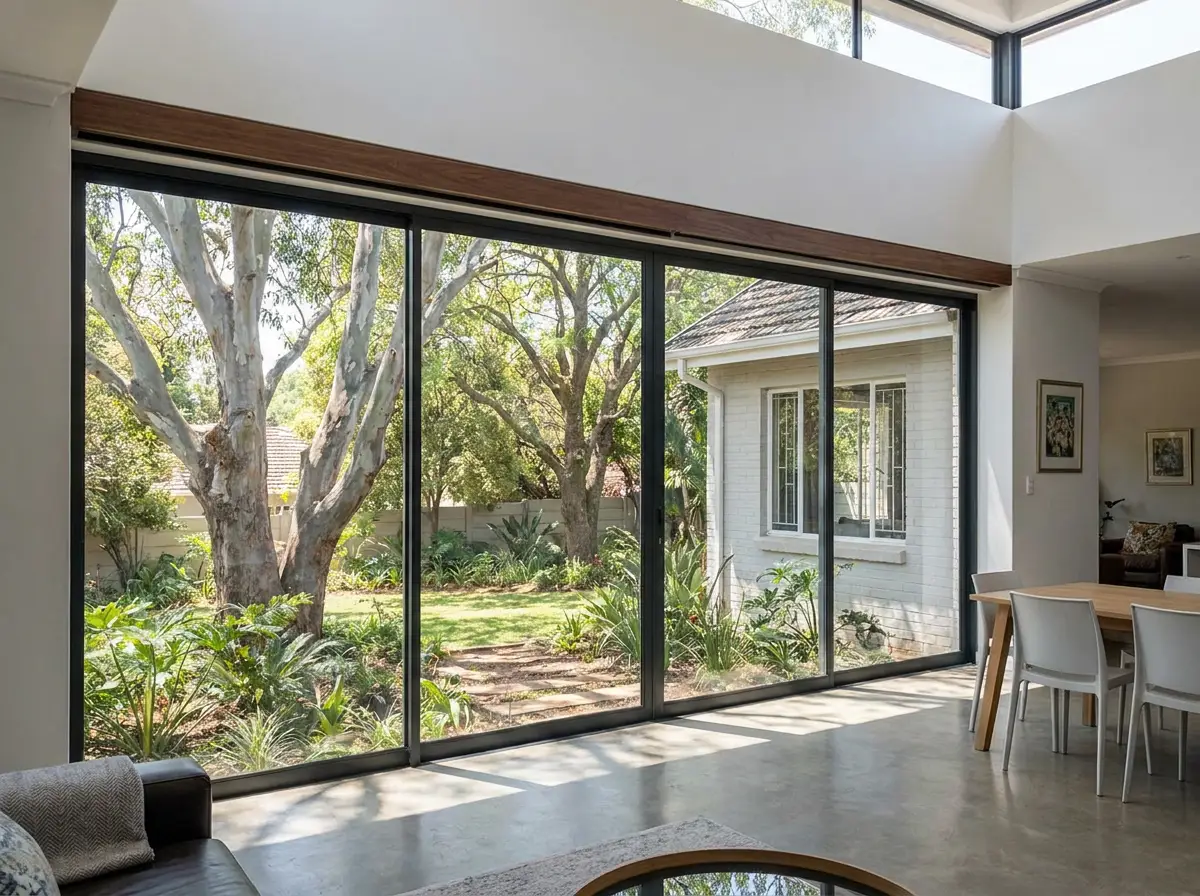
Concealed & recessed systems
Fabric drops from a slim ceiling slot or bulkhead recess, hardware fully hidden — when the blind is raised, the window shows nothing but glass and frame. The earlier we're brought into the drawing stage of a new extension, the cleaner the result; retrofit is still possible on existing rooms with a surface bulkhead or a slim colour-matched cassette pelmet.
- Recess dimensions — vary by blind type (roller needs roughly 110–150mm depth depending on tube and fabric drop); we confirm exact specs at the measure, never a guess over the phone.
- Almost always motorised — hand-reaching into a ceiling slot defeats the purpose of a concealed system.
Cellular / honeycomb blinds
Pleated fabric forming hexagonal air cells — the best-insulating interior blind made. Trapped air is a soft thermal buffer both ways, which matters for the room above a garage or a new double-volume space that runs hot in summer and cold in winter.
- Top-down/bottom-up operation — privacy at the bottom, light and sky at the top, ideal for a street-facing window with young children in the room.
- Cordless and motorised options, with the slimmest stack of any blind when raised.
Motorised & automation
The premium layer across every product on this page, and on wide extension glazing or a concealed ceiling system, close to the only practical option. Sun sensors drop shading automatically on hot elevations; app and schedule control mean the west-facing blinds can already be down before anyone gets home.
No dangling chains is the most child-safe operation there is — a genuine reason to consider motorising anything within reach of a toddler, not just the unreachable ones. Battery motors need a periodic charge; wired 220V motors need an electrician and planning at build stage. We'll size the right option honestly for your budget and your build.